http://www.phys-astro.sonoma.edu/brucemedalists/parker/index.html
http://www.nndb.com/people/474/000171958/
http://news.nationalgeographic.com/news/2003/08/0827_030827_kyotoprizeparker.html
Wednesday, April 30, 2014

Friday, April 25, 2014
MicroObservatory Whirlpool Galaxy

APOD 4.5
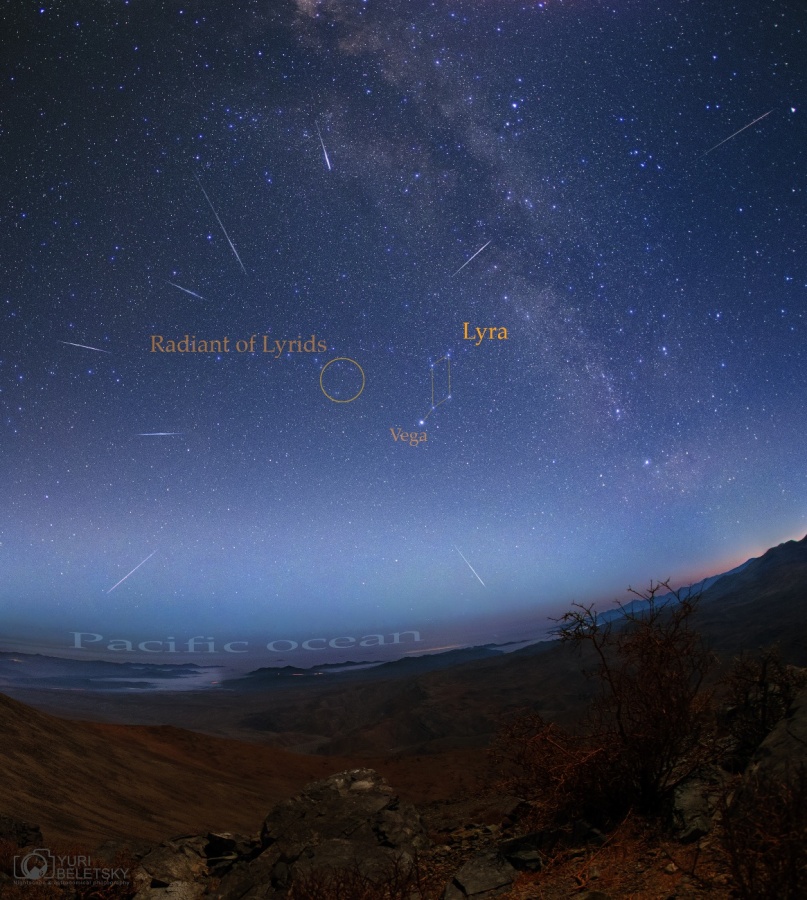
April 22nd featured the Earth's annual Lyrid meteor shower just before dawn. This occurs due to the Earth's rotation in its orbit which goes through a clump of dust from the tail of the comet Thatcher. Photoed above you can see the meteors streaming away from the constellation Lyra, properly named after this Lyrid meteor shower. Beyond the shower, normal stars of our Milky Way Galaxy can be seen.
Thursday, April 17, 2014
Lagoon Nebula MicroObservatory

Pictured above is the Lagoon Nebula that I received from the Micro Observatory and touched up using the downloaded application to fix the image. I used the Log- Auto setting to bring the stars to view and then sharpened the image to extinguish the background noise and pixels that appeared as stars. Then I used the red, blue, and green and stacked them on top of each other to create a fully colored image of the Lagoon Nebula.
APOD 4.4
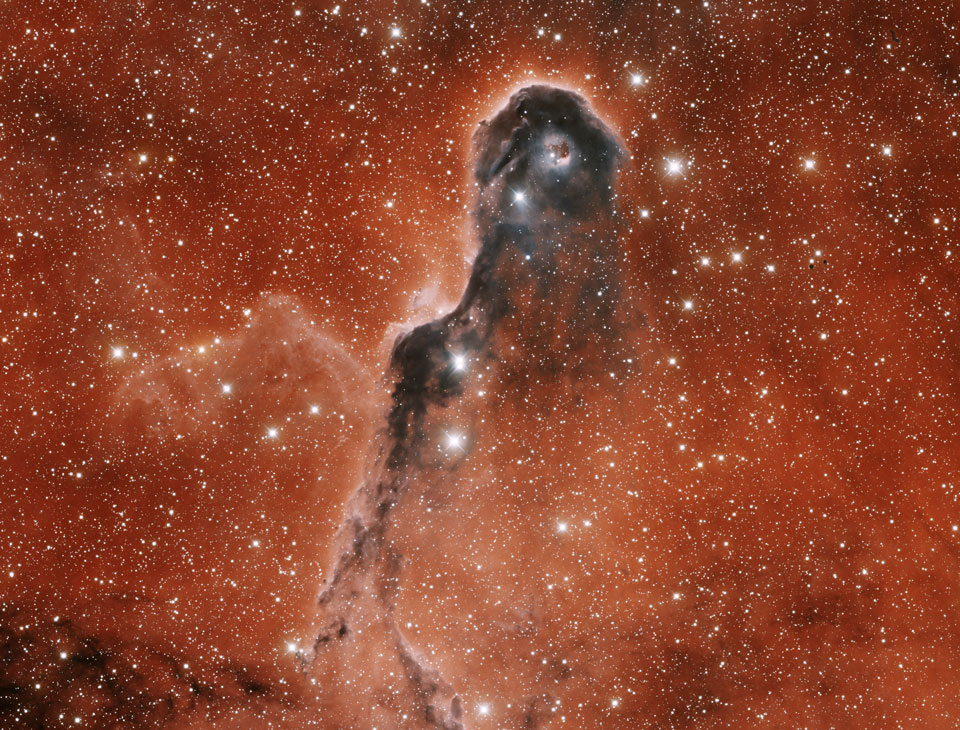
Photoed above is the Elephant's Trunk Nebula, a gas and dust clouded region within star formations that is seen to be taking on an interesting forms. An energetic star far from earth is consuming the dust of the globular towards the top of the image. In doing so, gasses and dusts are being pushed away from the star
forming the above dark cloud stretched across the picture. It is much larger than it appears with a width that covers over 10 full moons.
Friday, April 11, 2014
Observation

Last night the moon was in its waxing gibbous phase as it approaches the full moon phase. Mars has been approaching its opposition and will appear there around April 14 which is additionally the night that the moon will enter a total eclipse.
APOD 4.3

Tonight Mars will appear between its opposition and closest approach ( April 8 and 14). It goes around the constellation Virgo in the night sky which makes it prime season for telescopic views. This photo was taken on April 3 through a 16-inch diameter telescope from Assis, Brazil. Its tilt shows the polar cap towards the top left The white shapes are orographic clouds (white vapor clouds condensing in teh cold atmosphere). April 14/1 will be the closest approach of Mars and a total eclipse of the Moon. .
Thursday, April 10, 2014
What contribution(s) have been made towards understanding nature/the structure of the Milky Way ?
Galileo-
•stars make up the Milky Way
• 'Why are there invisible objects in the night sky?'
William Herschel-
• Milky Way is disk-shaped!
Harlow Shapely-
• spiral nebulae are nearby clouds of gas within the Milky Way and did not believe they were beyond the Milky Way
•believed it was 300,000 light years in diameter (close, it's actually 100,000)
Edwin Hubble-
• showed that universe was more than just Milky Way
• Milky Way is one of many galaxies
•zone of avoidance around Milky Way
RR Lyrids and Cepheids-
• good 'candles' for things within Milky Way
• about 85,000 in Milky Way
Immanuel Kant-
• many stars are outside of Milky Way
Henrietta Leavitt-
• 'Period-Lumionosity Relationship' to measure distances in the universe
• increased assistance in Hertzsprung with distances of Cepheids in Milky Way
Herber Curtis-
• role in Great Debate with Harlow Shapely
• spiral nebulae a are actually spiral galaxies outside of Milky Way
"The Great Debate"
• Shapely v. Curtis
• 1920
• nature of spiral nebula and size of universe
• Shapely= spiral nebulae are inside Milky Way - increased size of universe
• Curtis= spiral nebulae are galaxies outside Milky Way
•stars make up the Milky Way
• 'Why are there invisible objects in the night sky?'
William Herschel-
• Milky Way is disk-shaped!
Harlow Shapely-
• spiral nebulae are nearby clouds of gas within the Milky Way and did not believe they were beyond the Milky Way
•believed it was 300,000 light years in diameter (close, it's actually 100,000)
Edwin Hubble-
• showed that universe was more than just Milky Way
• Milky Way is one of many galaxies
•zone of avoidance around Milky Way
RR Lyrids and Cepheids-
• good 'candles' for things within Milky Way
• about 85,000 in Milky Way
Immanuel Kant-
• many stars are outside of Milky Way
Henrietta Leavitt-
• 'Period-Lumionosity Relationship' to measure distances in the universe
• increased assistance in Hertzsprung with distances of Cepheids in Milky Way
Herber Curtis-
• role in Great Debate with Harlow Shapely
• spiral nebulae a are actually spiral galaxies outside of Milky Way
"The Great Debate"
• Shapely v. Curtis
• 1920
• nature of spiral nebula and size of universe
• Shapely= spiral nebulae are inside Milky Way - increased size of universe
• Curtis= spiral nebulae are galaxies outside Milky Way
Tuesday, April 8, 2014
MIcro Obsevatory Dumbbell Nebula

I took three photos of the Dumbbell Nebula that I had emailed to me from requesting images- red, blue, and green images of the nebula- and stacked them together to form a full color photo. I had to realign it and use the auto- Linear filter in order to get a better image and diminish the background pixels that didn't need to be viewed. I neglected to crop the photo for a more direct view of the nebula but I could go back and do so if I desired.
Friday, April 4, 2014
Observation
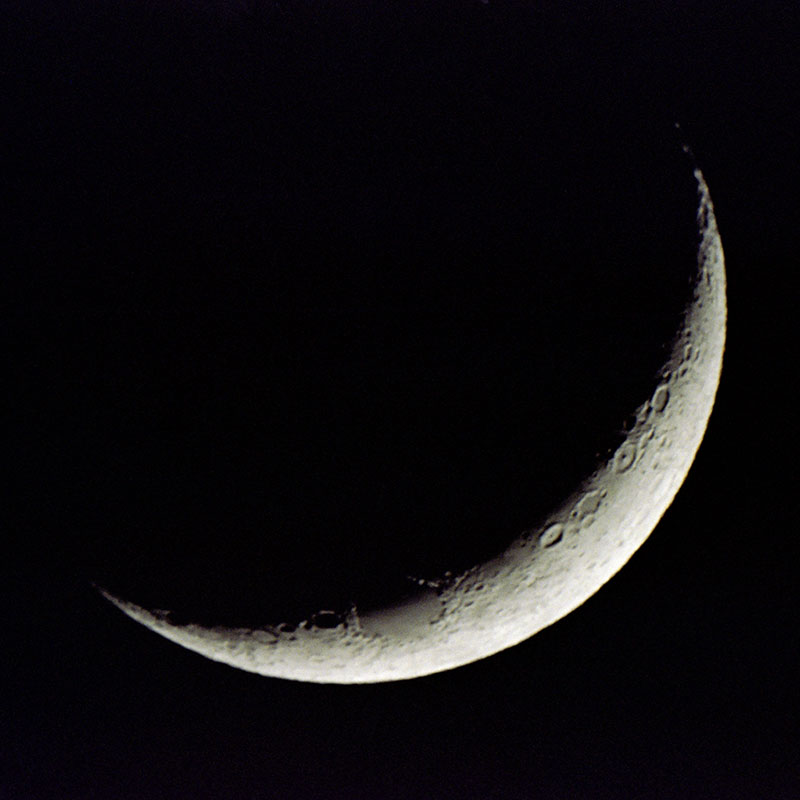
This week's moon phase was a waxing crescent and could be seen throughout the week in the night sky. This morning as I left my house I noticed the moon was shaded by clouds which gave it a viusally misty effect.
APOD 4.2
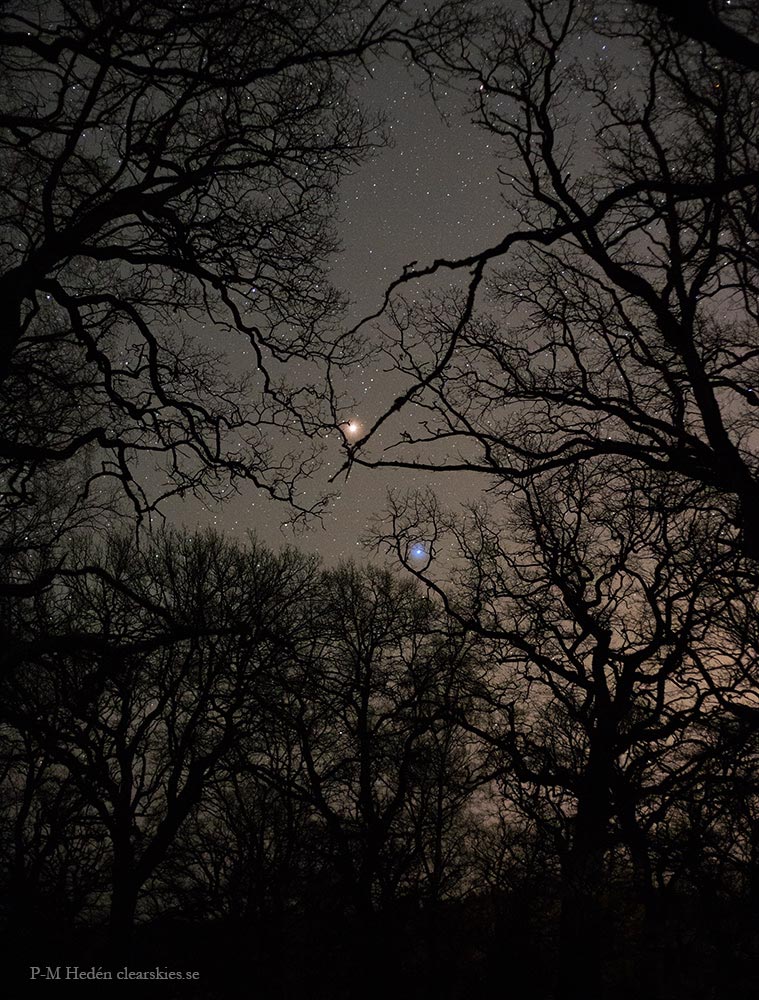
Pictured above is Mars (red) and Spica (blue) brightly shining in the night sky on Wednesday, April 2, 2014. Next week, Mars will reach its optimum brightness in the night sky and will be very clearly visible to the naked eye as it is in this photo. Spica is an incredibly old star having been observed since ancient times. It is known as one of the brightest blue stars in the night sky and is constantly shining. This photo was taken after sunset in Sweden last week.
APOD 4.1

Photoed above is the object M78 within the constellation Orion. Its blue glow and dark swirls are dust that absorbs light (darker portions) and reflects the light of blue stars within the nebula (blue glow). In the center is M78 while NGC 2071 is just to its lower left. The blue color is so bright due to the similar sort of scattering that happens within Earth's atmosphere. The constellation Orion also contains Orion's Belt and the Horse Head Nebula.
Subscribe to:
Posts (Atom)