Monday, December 2, 2013

APOD 11


Located over the Sierra Nevada Mountains in Grenada, Spain a cloud cap formed due to the upward air force that cools and condences, becoming a cloud that capped around the peak of the mountain. It even forms lenticular cloud layers as the condenced water vapor encircles around the center of the air source. Its color is due to the reflecting beams the sun reflects during its sunset onto the condensating cloud. I chose this photo for a break between stars and constellations, also finding interest in how this cap cloud formed.

APOD 10


The globular cluster of M15 pictured above is part of the constellation Pegasus, commonly known as the Winged Horse. Continuously circuling the Milky Way, this globular cluster consists of over 100,000 stars and its 'Great Square' appearance easily visible in the night sky. Although I have covered M15 as an APOD in the past, I chose it again due to the amazing visual it represents here and its significance relative to the Milky Way Galaxy. Its varying colors of orange and blue stars that encompass the white glow in the center is incredibly eye appealing and adds to the amazingness of M15.

Monday, November 25, 2013

Astronomer Friedrich Georg Struve Sources

http://www.nndb.com/people/202/000097908/

http://biography.yourdictionary.com/friedrich-georg-wilhelm-von-struve

http://www.ajaloomuuseum.ut.ee/vvebook/pages/4_3.html

http://www.saint-petersburg.com/german/friedrich-georg-wilhelm-struve/


Friday, November 22, 2013

Solar System - Lunar Eclipse References


http://www.moonconnection.com/lunar_vs_solar.phtml

http://www.inconstantmoon.com/not_danj.htm

Harrington, Philip S. Eclipse!: The What, Where, When, Why, and How Guide to Watching Solar and Lunar Eclipses.    New York: J. Wiley, 1997. Print.

 Russell (1895). The Observatory, Volume 18 By NASA Astrophysics Data System Abstract Service. TAYLOR AND FRANCIS, RED LION COURT, FLEET STREET. p. 431. Retrieved 2010-04-28.

Tuesday, November 19, 2013

APOD9


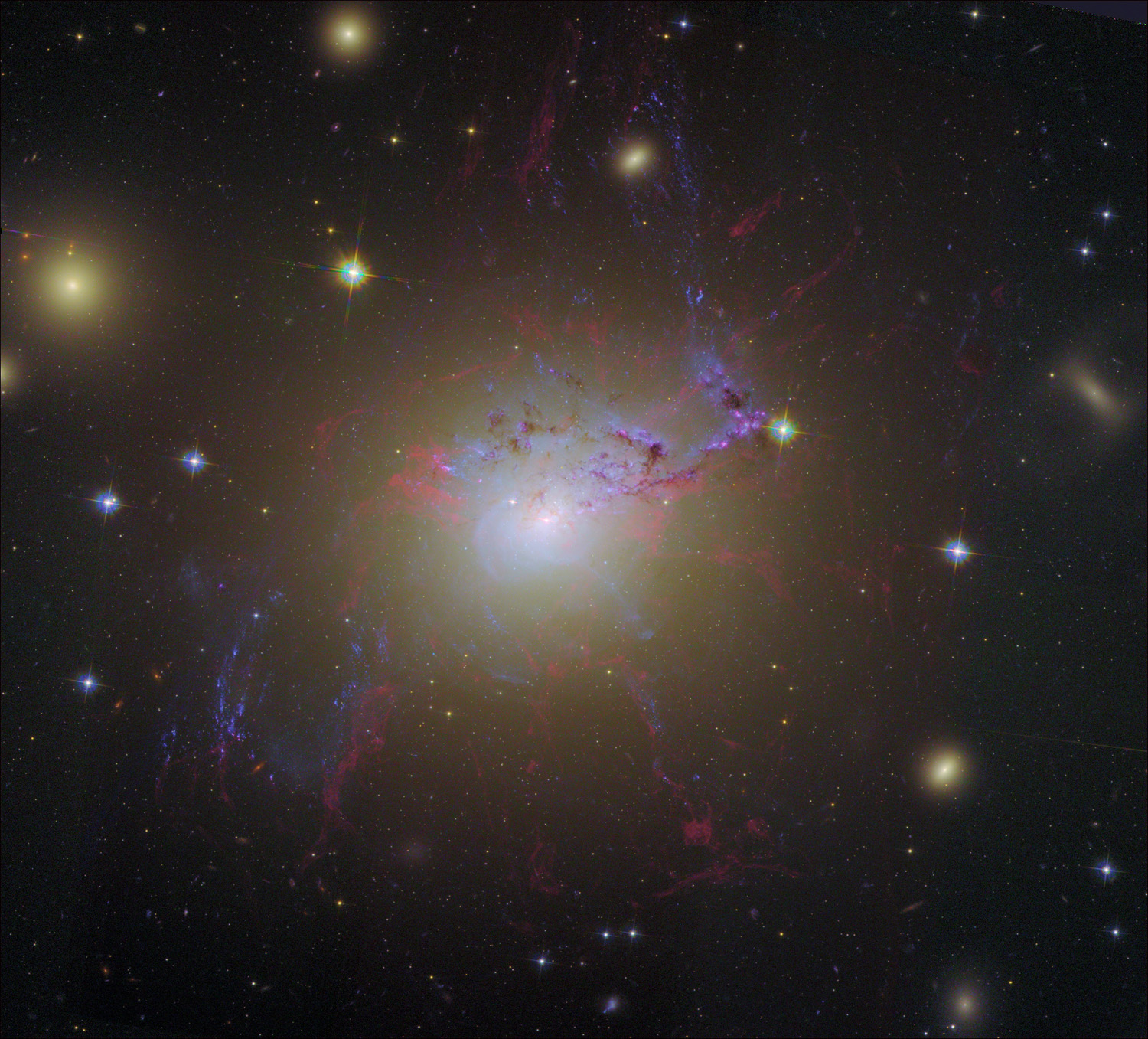
Spiral galaxy NGC 1097, part of constellation Fornax, is 45 million light years away. The interesting mix of oranges, blues, and purple creates an eye catching attraction to the galaxy. I chose this photo because it has to do with Fornax which is a constellation we will be learning about in the future and it's almost like an introductory to the constellation as opposed to a photo of something we will most likely not learn about, at least not in decent depth. v

Monday, November 11, 2013

APOD8


This image shows Comet Lovejoy soaring past the constellation Cancer near M44 which can be seen in very dark skys. Discovered in September, it is the morning sky's brightest comet. You can also see Delta Canci towards the bottom of the image, a star in the constellation Cancer. I chose this photo because of its eye catching colors and image and its correlation to the constellation Cancer which we will soon be leraning about for future constellation quizzes.

Friday, November 1, 2013

APOD7


This photo of the constellation Draco, the Dragon, shows the Draco Group located in the northern part of the constellation. The Draco Group includes the edge spiral galaxy on the left, NGC 5981, the eliptical galxaxy in the middle, NGC 5982, and the face on galaxy on the right, NGC 5985. The face on galaxy to the right has been shown to be an active galaxy through spectrometry due to its emissions in certain wavelenghths. I found this photo particularly intriguing because we have studied the constellation Draco and recently learned about spectrometry, both of which are included within this APOD. The colorful, variety of galaxies shown in the photo are very eyecatching becuase of their colors and different views (edge/face on views).

Friday, October 18, 2013

APOD 6


This image shows the constellation of Orion surrounded by dust clouds. M78 is located left of the center slightly north of Orion's Belt. The different shades shown in the photo represent the temperature differations, blue being hotter and red being cooler. I chose this photo because I found it really intriguing to see a constellation I could recognize in the sky outside in a galactic, colored perspective and be able to really appreciate more than just the location and figure of the constellation.

Thursday, October 17, 2013

Observation 4

October 14, 2013
8:00-10:00

While doing my homework I decided to sit outside for some stargazing using only my naked eye and phone app. The sky was unfortunately, basically the same as the previous nights so I was still able to spot Polaris, Draco, Cepheus, Corona Borealis, Ursa Minor, and Centaurus. In addition to the previous stars and constellations I also was able to identify a bit of Cassiopeia in the North Eastern part of the sky. The moon was now officially in its waxing gibbous stage, preparing to approach a Full Moon.

Observation 3

October 12, 2013
8:00-10:00

With my naked eye and iPhone app it was, as usual, easy to identify Polaris. Although the view in the sky didn't shift much from the previous night, I did notice a few things I did not yesterday such as parts of Centaurus in the south west and Cepheus all the way in the north. I again saw Draco in the north and Corona Borealis in the north west. The moon was beginning to enter the waxing gibbous phase as it left first quarter.

Observation 2


October 11, 2013
8:00-10:00

Using my naked eye and sky guide app on my cellphone I was easily able to identify Polaris and the Corona Borealis, which was off in the West. Looking towards the North I could see Draco and Ursa Minor (Little Dipper) which are both circumpolar and located by polaris. It was hard to identify much else since we haven't really reached this part of the sky yet in our constellations but I also noted the Moon in its first quarter phase.

Observation 1

October 10, 2013
8:00-10:00

As I looked into the night sky, using only my naked eye and the slight assistance of a star app on my phone, I could easily identify the summer triangle, which includes stars Vega, Deneb, and Altair, and the North Star, Polaris, in the night sky. The moon was in its waxing gibbous phase and I believe I could feintly spot the Big and Little Dipper in the south but it was difficult to make out. Although it took a while for my eyes to adjust, it was interesting to watch the night sky and apply what I've been learning in the classroom to real life! I'd say it was a fairly successful first night of star-gazing.

Wednesday, October 16, 2013

Astronomer: Ole Røemer

Ole Røemer was born September 25, 1644 in Aarhus, Denmark and would soon be known as the discoverer of the speed of light. Røemer was born to father Christen Pedersen Røemer, a small merchant who would die in 1663 leaving his son navigational tools and books in which he would later use to toy with scientific discovery.  Røemer went on to school at University of Copenhagen where he studied mainly astronomy while dabbling with physics, working with Thomas and Erasmus Bartholin before going on to the Paris Observatory where he would soon make an unexpected discovery. He died in Copenhagen, Denmark on September 19, 1710 at age 66.
While studying one of Jupitor's satellites at the Paris Observatory, Røemer unexpectedly discovered the mathematical speed of light. In trying to calculate the satellite orbit of Jupitor using mathematics, he came across a continual number pattern which he then discovered was the speed of light and was able to discover its use in astronomy. He is now known as the first person to measure the speed of light.
 Without Røemer's discovery of the speed of light, today astronomers, scientists, and physicists would be unable to calculate things such as wavelength, frequencies, and distance from Earth and other spacial objects. This lack of knowledge would be the cause living in a world where most discoveries in astronomy made after Røemer's would be incapable without knowing the speed of light for calculations and discoveries of the unknown.
 

Friday, October 11, 2013

APOD5


This photo features NGC 891, a spiral galaxy spanning out to about one thousand light years located within the constellation Andromeda. Resembling the milky way, this galaxy is surrounded by a cluster of stars and emits complimentary colors of yellows, purples, and vague pinks and blues .The dust surrounding the galaxy is most likely due to supernova explosoins or star formations within the galaxy.

Sunday, October 6, 2013

Astronomer Resources

http://www.amnh.org/education/resources/rfl/web/essaybooks/cosmic/p_roemer.html

http://galileo.rice.edu/Catalog/NewFiles/roemer.html

http://www.britannica.com/EBchecked/topic/508943/Ole-Romer

APOD4


This active galaxy NGC 1275 is the center of the larger galaxy, Perseus Cluster of Galaxies. With it's emission of X-Ray and radio waves, it is very relevant to the matter we are currently learning about in chapter 2. It's visible wavelengths shine a mix of colors between purple, blue, indigo, violet, red, and pink that are all emitted around a ball of light at its center. I chose this picture because of its relevance to our class learning about light spectrums and their emissions and it's eye-appealing swirl of mystical colors.

Friday, September 27, 2013

APOD3


This is a photo of M81 and M82 in view within the Milky Way 12-million lightyears away. These two galaxys have been struggling between gravity for billions of years, and will result in only one of these two galaxys existing in the next couple billion years. These galaxies are ecompassed by infiniate distant stars and clouds within the huge Milky Way galaxy. I find this photo to be mind blowing in a sense of the galaxy of colors swirling within each other and the amazing glow of each star surrounding them.

Friday, September 20, 2013

APOD2


I chose this picture of the M2-9 butterfly nebula because I felt it looked really different and interesting. The colors the nebula create are really gorgeous agains the black background of the rest of the universe. I also found the bright star just below the nebula to be very eye catching compared to the other stars visible in the photo. This dying star creates a work of art in the universe that we are amazingly able to capture in space and keep record of, which I personally find to be fascinating.

Friday, September 13, 2013

APOD1


I picked this photo of The Andes Mountains at night because I found the forest of snow really fascinating and the stars in the sky look so surreal and bright. The different shades of blues and purples reflected in the sky give the stars a gorgeous glow, making it easy to spot constellatoins such as Orion towards the right and the triangulum mid-left of the image.