Friday, March 21, 2014

Observation


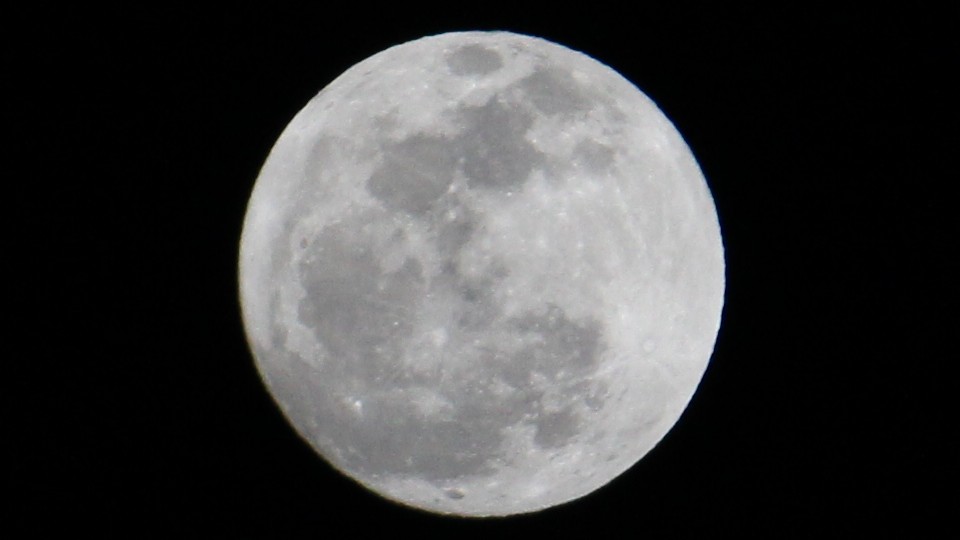
At the beginning of the week the moon entered its 'Full Moon' phase and is approaching the Last Quarter phase which will be completed early next week. Earlier in the week the moon could be seen near Mars in the morning sky on the 19th, which was Wednesday. Yesterday at approximately 12:57 PM the sun crossed into the Northern Celestial Hemisphere and brought the official first day of 2014 Spring. On a separate note, NASA announced its discovery of the first official evidence to prove the Big Bang Theory of our universe. Pretty exciting week in astronomy!

Tuesday, March 18, 2014

Pulsars and Neutron Stars

                                     Neutron Stars  Pulsar  

Neutron Stars: 
  • 20 km in diameter
  • 1.4 times mass of our Sun
  • Surface gravitational field of about 2 x 10¹¹
  • One possible end to a star
  • Appear in supernova remnants, isolated objects, or binary systems
  • Four known Neutron Stars have planets

Pulsars: 
  • Rotating Neutron Stars that appear to pulse due to the rotation
  • Discovered in 1967 by Jocelyn Bell Burnell
  • Jets of particles shoot out almost at the speed of light above the magnetic poles
  • Spin axis and Magnetic axis are disaligned (similar to Earth)


Friday, March 7, 2014

Observation

With the new moon premiering on March 1st, we see its transition into waning crescent throughout the week. Photos of the moon earlier in the week show the shadow of Earth reflected in the outline of the moon, blurring the edges of the appearance of the moon. Tonight the moon will appear close to Aldebaran and Pleiades, part of constellation Taurus the Bull . 
 

APOD 3.8


Since we recently learned a lot about the sun in class, this photo of a prominence beyond the edge of the sun proves to be increasingly relevant to classroom material. The prominence photoed above is a sea of hot gas in the chromosphere can be seen in the light reflected by hydrogen. The photo even shows how the Earth is smaller than the prominence. Prominences are incredibly hot, but next to the sun appear darker considering the sun is hotter in comparison. These prominences last normally last about a month and may erupt in a Coronal Mass Ejection, expelling hot gas into the Solar System which could hit the Earth and cause auroras.


Thursday, March 6, 2014

Willem de Sitter


Willem de Sitter was born on May 6th, 1972, to town judge Lamoraal Ulbo de Sitter and Catharine Theodore Wilhelmine Bertling de Sitter in the small town of Sneek, located in northern Netherlands. Although coming from a typical and rather strict family, Willem developed an imaginative yet intelligent mind that would serve him greatly for his endeavors as an astronomer and a mathematician. His intelligence and curiosity from the very beginning is what brought him to develop an equal and unique passion for mathematics, cosmology, and astronomy.
A successful mathematician, astrologist, and cosmologist, de Sitter begun his journey at the University of Groningen, where he majored in mathematics. During his studies he had a stroke of luck which consisted of him meeting David Gill, who was a dedicated astronomer. Upon meeting him he consequently was invited to work at “Her Majesty’s Observatory at the Cape of Good Hope”, from there his astronomic endeavors took off. Besides his passion for astronomy, Sitter developed theoretical models of the universe based off Einstein’s general theory of relativity. Einstein claimed that the universe was static and unchanged; however, de Sitter claimed that relativity implied the universe was constantly expanded. Eventually after Edwin Hubble’s observations backed up Sitter’s claims, Einstein also accepted this idea. Sitter’s contributions and application of Einstein’s theory to astronomy was revolutionary and is noted as a basis to many theories and progressions in astronomy as well as cosmology. De Sitter was director of Leiden observatory until his death November 20, 1934 due to a brief illness.